ai and memory
AI and the Ethics of Remembering
A machine can now reconstruct a face, a voice, a sentence someone never said. The question is no longer whether it can.
By The Memorivos Curators · · 7 min read
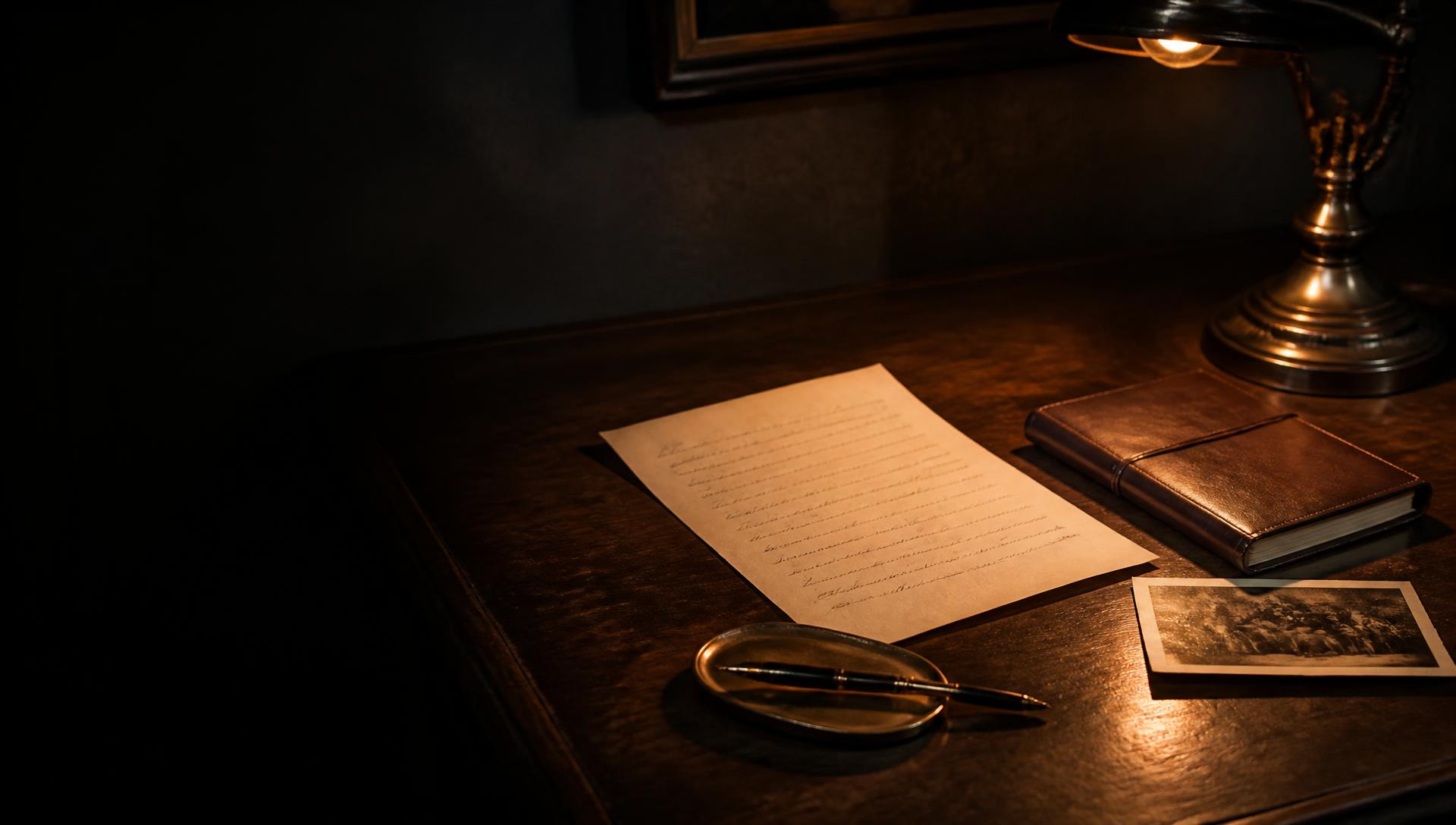
There is a photograph in most families that is almost good enough. Slightly out of focus, or torn across a shoulder, or faded to the point where a face has become a suggestion.
For the first time in history, that photograph can be fixed. Not repaired in the old sense — cleaned, colour-balanced, patched — but completed. A machine can propose the missing eye. It can sharpen a face into definition. It can, if asked, make the person smile.
This is a genuine gift and a genuine hazard, and families are being handed both at once with no guidance whatsoever.
What AI does well
Some uses are straightforwardly good, and refusing them out of caution helps nobody.
- **Transcription.** An hour of a grandmother speaking becomes searchable text in minutes. Nothing is invented; something almost inaccessible becomes usable.
- **Description and sorting.** Ten thousand unlabelled photographs can be grouped, dated and roughly described so a human can begin.
- **Damage repair.** Removing a crease, correcting a colour cast, reducing grain. These recover information that is present but obscured.
- **Prompting.** Good questions are hard to think of when you are sitting opposite someone you love. A machine that suggests "ask about her first job" is doing quiet, useful work.
- **Translation.** A letter in a language nobody in the family still reads becomes legible again.
What these have in common: the machine assists a human with material that already exists.
Where it turns
The line falls at invention.
When a tool generates a face that was never photographed, a sentence that was never spoken, or a voice saying words the person never said, it is no longer preserving a memory. It is producing content in the shape of one.
Restoration recovers what was there. Generation supplies what was not. Only one of them is remembering.
This distinction is easy to state and very easy to lose, because generated material is pleasant. It is sharper, warmer and more complete than the truth. Grief is drawn to it exactly as thirst is drawn to salt water.
Three tests before you generate anything
**Would they have consented?** Not "would they have enjoyed it" — consented. A person who disliked being photographed did not secretly want a synthetic portrait. Someone who chose their words carefully would not want words chosen for them.
**Can the next generation tell?** In twenty years, will anyone know which image is the photograph and which is the reconstruction? If not, you have introduced a false document into your family's record. Label everything. Keep every original.
**Is it for remembering, or for not-losing?** A restored portrait hung on a wall is remembering. A chatbot trained on a dead parent's messages, spoken to nightly, is something else — and the people who study grief are consistent that the something else tends to prolong the worst part.
The particular problem of voices
Voice is the most affecting thing AI can now reproduce, and the most dangerous.
Hearing a parent again is overwhelming. It is also, in a real sense, false — the timing is not theirs, the hesitations are not theirs, the choice of words is a statistical average of how they used to write. A synthetic voice can say something the person spent their whole life not saying.
Keep the real recordings. Record more of them now, while you can. A thirty-second voice note of someone reading a shopping list is worth more, in twenty years, than any reconstruction.
What a responsible tool should do
If you are choosing where to keep your family's memories, the ethics are visible in the product.
- Originals are always kept, unmodified, and easy to retrieve.
- Anything machine-generated is labelled as such, permanently.
- The person's own words are treated as sacred and never rewritten silently.
- Nothing about a family is used to train anything for anyone else.
- The default is restraint: the tool suggests, the human decides.
Remembering is an act of fidelity
The purpose of a family archive is not to produce the most beautiful possible version of the people in it. It is to say, accurately: *this happened, and these were the people it happened to.*
A slightly blurred photograph is true. A perfect one that no camera ever took is a kindness to the living and an unkindness to the dead.
Use the machine. Let it read, sort, clean, translate and prompt. Do not let it speak for anyone who is no longer able to object.
- artificial intelligence
- ethics
- preservation
- digital legacy