digital legacy
What Is a Digital Legacy, and Why Does Yours Already Exist?
Everyone alive today leaves one. Very few people decide what it should say.
By The Memorivos Curators · · 7 min read
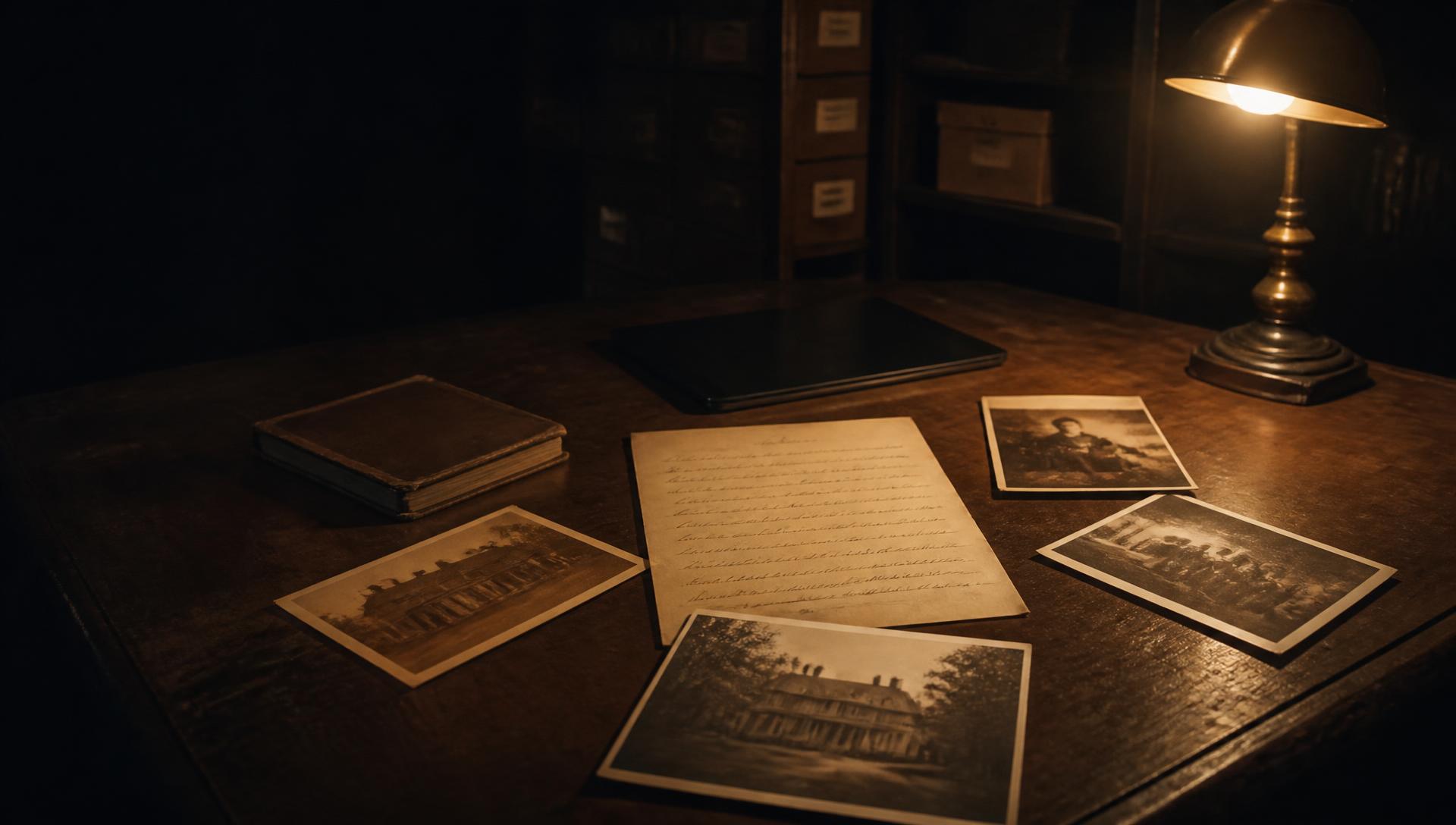
A hundred years ago, a life left behind a shoebox. Letters tied with string, a christening certificate, three or four photographs where nobody smiles. It was small enough to hold, and because it was small, it survived. Someone put it in an attic, and someone else found it.
Today a life leaves behind something enormous and strangely fragile. Thirty thousand photographs. A decade of messages. Voice notes, playlists, comments, half-written documents, accounts nobody else can open. This is your digital legacy, and you already have one, whether or not you have ever thought about it.
A definition worth keeping
A digital legacy is everything of you that exists in digital form and continues to exist after you do.
It has three layers, and confusing them is the source of most of the difficulty families face.
- **The assets.** Things with monetary or practical value: bank access, domains, subscriptions, cryptocurrency, business accounts.
- **The records.** Documents, correspondence, medical and legal information — the paperwork of a life.
- **The memories.** Photographs, recordings, writing, and the stories attached to them. This is the layer families actually grieve for, and the layer least often planned for.
Estate law is reasonably good at the first. It is workmanlike at the second. It is almost entirely silent on the third.
The paperwork of your life will be handled by someone. The meaning of your life will only be handled if you handle it.
Why it disappears
Digital things feel permanent because they do not visibly decay. Nothing yellows. Nothing curls at the edges. But digital memory fails in ways that paper never did, and it fails quietly.
**Accounts close.** Most platforms treat your account as a licence, not a possession. When the licence lapses, so does the content.
**Formats fade.** A file written in 2004 may open today and refuse to open in 2044. Software outlives nothing.
**Context evaporates.** A photograph of a woman standing beside a car is priceless if you know she is your grandmother on the day she learned to drive. Without that sentence, it is a stranger and a car. Context is the first thing lost and the only thing that cannot be recovered later.
**Nobody can get in.** Two-factor authentication, biometric locks and legitimate privacy protections mean that a well-secured digital life is often a sealed one. Families are left standing outside a locked room, knowing exactly what is inside.
What your family will actually look for
When someone dies, the search is remarkably consistent. Families look for a photograph of the person before they were ill. They look for a recording of the voice. They look for something written in the person's own words — anything at all, however ordinary.
They rarely look for the archive. They look for the few things inside it that carry the person.
This has a practical consequence. A digital legacy is not made better by being larger. Ten thousand unsorted photographs are a burden; forty photographs with names, dates and a sentence each are an inheritance.
Deciding what yours will say
Shaping a digital legacy is less technical than it sounds. It comes down to four decisions.
- **What is worth keeping.** Not everything is. Choosing is an act of love, not of loss.
- **What each thing means.** A name, a year, a sentence of context. This is the single highest-value act of preservation available to you.
- **Where it lives.** Somewhere that does not depend on a single device, a single company, or a single password in a single head.
- **Who receives it, and when.** A named person who knows they have been named, and knows how to reach what you have left.
None of this requires a lawyer. All of it requires an afternoon.
Start with one hour
If you do nothing else, do this. Open the photographs from the last five years. Choose twenty. For each, write who is in it, roughly when it was taken, and one line about why it mattered.
You will have spent an hour. You will have made twenty images legible to people who are not yet born. That is a digital legacy — not a document filed away, but a small, deliberate act of clarity, repeated whenever you have the time.
The shoebox survived because someone decided it was worth keeping and put it somewhere findable. Nothing about that has changed. Only the scale has.
- digital legacy
- preservation
- family history
- planning